
PCI-E 4.0 ports are well catered for on the X570-Pro, we get a trio of x16 slots and the same in x1 which should give plenty of scope for expansion cards. There’s also a pair of NVMe 4.0 slots, one of which is adorned with a metal heatsink for SSDs that don’t already have one; this can easily be removed and stored in the motherboard box if you wish.
Along the bottom of the motherboard, ASUS have equipped the Prime X570 with three 4-pin PWM connections and internal and external USB headers.

The 40mm fan hidden behind the white shroud is used to keep the power-hungry X570 chipset FCH cool under heavy loads, with the new PCI-E 4.0 specification generating quite a bit of heat when it’s called upon.

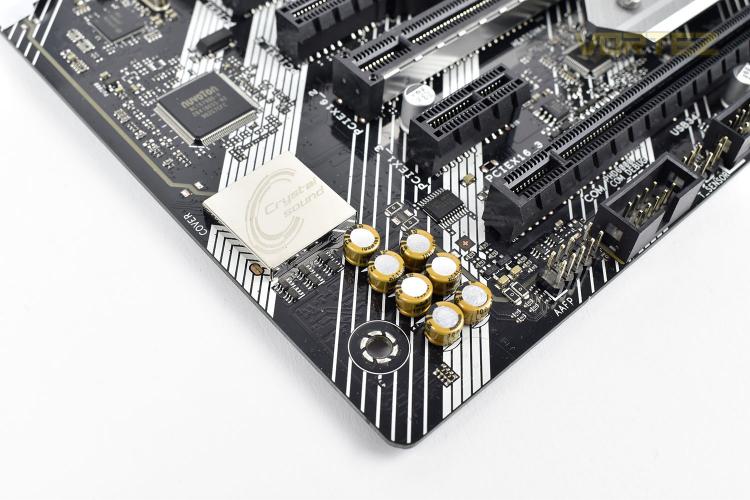
Finally, the audio solution, where ASUS have worked in close collaboration with Realtek to implement the Realtek S1220A audio codec, featuring 120dB SNR for the stereo line-out and 113dB SNR for the line-in, providing clear audio. Additionally, an impedance sensor can detect the optimal range for your headphones and make the relevant adjustments to the system to improve audio quality further.
Along the bottom of the motherboard, ASUS have equipped the Prime X570 with three 4-pin PWM connections and internal and external USB headers.
The 40mm fan hidden behind the white shroud is used to keep the power-hungry X570 chipset FCH cool under heavy loads, with the new PCI-E 4.0 specification generating quite a bit of heat when it’s called upon.
Finally, the audio solution, where ASUS have worked in close collaboration with Realtek to implement the Realtek S1220A audio codec, featuring 120dB SNR for the stereo line-out and 113dB SNR for the line-in, providing clear audio. Additionally, an impedance sensor can detect the optimal range for your headphones and make the relevant adjustments to the system to improve audio quality further.


