
In terms of design, build and comfort, the TUF H5 offers a mixed experience, on one hand, there are some good elements and on the other, not so much. The styling of the H5 does include some subtle elements - like the digital camo, that tie in with the TUF brand. Other design touches are a bit more obvious, yet done in a way that isn’t too over the top. As for the colour, it’s mainly neutral with the exception of a yellow accent that borders the earcups. As for the build, there are small sections of metal, but the overall construction is mainly plastic. The plastics used are decent quality though some of them mark quite easily, notably on the outer earcup housing. The cable feels good though as it’s reasonably thick and fabric coated, the downside is that the cable is built-in meaning if it does so happen to break, the headset becomes unusable.
On the plus side, for such a large headset they are quite light - thanks to the mostly plastic build, and this does go a long way to help them be comfortable as they don’t weigh you down too much. In terms of padding both the earcups and headband have ample supply that is both soft and plush. The earcups in-particular are impressive as they pliable and feel great when wearing them. The one drawback is the depth of the padding, ASUS could have easily reduced this, but as is, they are a touch too deep. Heat build is not too bad as the inside of the cup is quite spacious, though they won’t stay as cool as fabric earcups, they don’t get over hot.
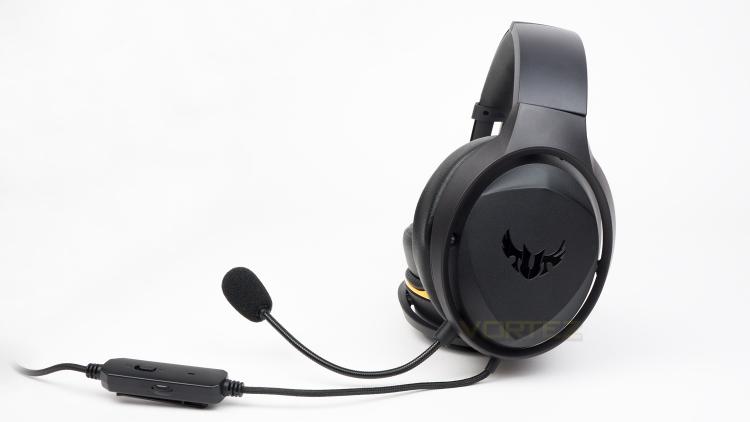
In-use the TUF H5 again offer a neutral experience, the in-line controller for starters is well positioned though, the volume control is a touch small and fiddly to use. The mic mute works great, however. As for the dongle, it’s well made and easy to use, if you can reach it. As is, the cable on the dongle is very short, this does make it ideal for laptop use, but not so much if you use them on a PC.
In terms of sound, the TUF H5 are really good. For music, the bass was a little bit on the light side and was lacking a bit of depth and low-end punch though this can easily be fixed with a quick bass bump. However, the midbass was pretty decent and provided just enough oomph to keep things interesting. The treble though is really impressive, it’s clear, has plenty of detail with good levels of in-sound separation. The treble is also fairly neutral meaning that it’s not overly bright nor too dull sounding. If we were to pick a side, they TUF H5 would be bordering on the cooler side as they don’t have much spark or vigour. Vocals again are clear, and have a nice tonal quality, they are lacking a bit of potency though. Sibilance is kept to a minimum too which is great.
For gaming, the H5 also fair very well, as the bass isn’t too over powerful there isn’t much detracting from the treble and other key areas. Though this is good, a stronger bass would have been nice for titles that more heavily rely on this region to create an atmosphere. Again though this can be remedied with a bass boost. The treble is again strong for gaming as it possesses strong levels of detail and clarity, this means that little details like footsteps and enemy reloads can be picked upon quite easily. The spacial awareness on offer is pretty solid too which helps keep you aware of your immediate environment.
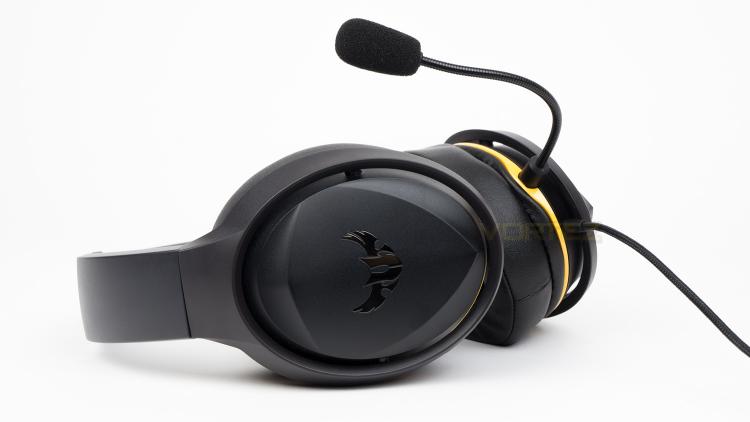
As for the microphones, there are two of them, one is built into the in-line controller, and the other is a detachable boom style. The in-line one has a frequency response of 50hz to 10,000Hz, and the booms is 100Hz to 10,000Hz. We tested the microphones with a volume 85% of and we also disabled all the software effects. These effects will alter the characteristics of the mics, so it would be worth testing these out to see which works best for you.
What we found was the in-line mic was quiet and sounded a touch muffled, there is no background noise present though which is a bonus. Vocals were decent as they were clear enough, though they could be too quiet for in-game voice chat. The boom mic was better quality, but again quiet. The tonality of the sound was a touch compressed, and a little nasally, there is also hints of an artificial tone due to the noise isolation. Bass pickup was a little light meaning your voice sounds thin and lacking body.
In-line microphone
Boom microphone
Overall neither of the mics are very strong with the settings we tested them at, though if you have time to play around with the settings, the quality could likely be improved.


