
This particular HD6970 is the first GIGABYTE graphics we have had on review here at Vortez and for the most part it lived up to our expectations. Throughout the benchmark suite, I mostly looked at the difference between itself and the ASUS variant of the HD6970, both of which following the reference design so I will take the opportunity here to give a quick rundown of its overall performance against other cards as well.
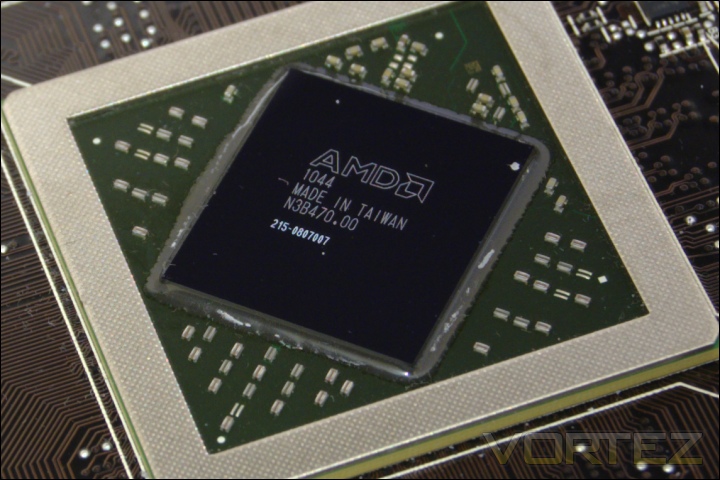
First and foremost, AMD have done a tremendous job with their HD6970s despite being unable to make the transition to the 28nm manufacturing process. A move to the smaller process would have allowed more stream processors, possibly higher clock speeds, and some new features. Unfortunately AMD had to sacrifice those to avoid increasing the die size much further on the 40nm manufacturing process. The main drawback has been the unhealthily high power consumption but on the brighter side, the improved tessellation engine, render back end, and most notably the new VLIW4 architecture has ensured much better performance than the old generation Cypress GPU despite the 64 stream processor deficit. The increase in texture units to 96, and 2GB framebuffer have also gone a long way to enhance AA and high resolution performance. These are portrayed throughout the review where the HD6970 extend its lead over previous AMD cards or closes the gap against Nvidia’s GTX580.

In terms of performance, I’ll start with the two HD6970s. The ASUS came with a 10MHz pre-overclock and managed a final core clock of 950 MHz through voltage tweaking. The GIGABYTE did not go through the same treatment and yet still managed to keep up with the ASUS. Even when overclocked to a lower final core speed of 916 MHz, it didn’t perform any differently to the ASUS, highlighting the drawback of voltage tweaking, and subsequently higher power consumption and PowerTune limitations. As mentioned previously, it is now possible to tweak the GIGABYTE’s voltages using Afterburner but there isn’t much need to do so. Overall, there was only 1% performance difference between the two, favouring the ASUS card. Power consumption on the other hand is the GIGABYTE’s main advantage.
Compared to other AMD offerings, namely the previous generation HD5870, GIGABYTE’s HD6970 leads by an average of 18%, and reduced 12% margin when overclocked. The main benefit of the 6 series is improved tessellation performance in games such as H.A.W.X 2, Metro 2033 and the Unigine benchmark. Against the cheaper HD6950, the HD6970 leads by 11%. We have to point out at this point that the 2GB HD6950 can be fully unlocked to a HD6970 if they follow the reference design.
The Nvidia GTX480 and GTX570 are AMD’s target competition this round. At stock speeds, the GTX480 we had on test came out on top by an average of 3.7% across all games. Even if we disregard H.A.W.X 2, which favours Nvidia cards much more, the performance difference is around 1.5% in favour of the GTX480. In a few situations, the HD6970 makes better usage of its 2GB memory to close the gap on the Nvidia card but it lacks the raw power to take the crown. Unfortunately, it gets worse when both are overclocked seeing as how the headroom on the HD6970 was relatively less than on the GTX480 in this case. In the end, the GTX480 took an average lead of 9.5%. It appears that Nvidia still provides better tessellation performance in Unigine.
The GIGABYTE HD6970 is a very appealing product but lacks any extras to give it the edge over its competition. It will be interesting to see future SOC variants of the HD6970. At its current price point, it is noticeably more expensive than the HD6950 and directly on competition with Nvidia GTX570, which is an issue AMD have to address to remain competitive.
The GIGABYTE HD6970 earns itself Vortez Bronze Award.


First and foremost, AMD have done a tremendous job with their HD6970s despite being unable to make the transition to the 28nm manufacturing process. A move to the smaller process would have allowed more stream processors, possibly higher clock speeds, and some new features. Unfortunately AMD had to sacrifice those to avoid increasing the die size much further on the 40nm manufacturing process. The main drawback has been the unhealthily high power consumption but on the brighter side, the improved tessellation engine, render back end, and most notably the new VLIW4 architecture has ensured much better performance than the old generation Cypress GPU despite the 64 stream processor deficit. The increase in texture units to 96, and 2GB framebuffer have also gone a long way to enhance AA and high resolution performance. These are portrayed throughout the review where the HD6970 extend its lead over previous AMD cards or closes the gap against Nvidia’s GTX580.
In terms of performance, I’ll start with the two HD6970s. The ASUS came with a 10MHz pre-overclock and managed a final core clock of 950 MHz through voltage tweaking. The GIGABYTE did not go through the same treatment and yet still managed to keep up with the ASUS. Even when overclocked to a lower final core speed of 916 MHz, it didn’t perform any differently to the ASUS, highlighting the drawback of voltage tweaking, and subsequently higher power consumption and PowerTune limitations. As mentioned previously, it is now possible to tweak the GIGABYTE’s voltages using Afterburner but there isn’t much need to do so. Overall, there was only 1% performance difference between the two, favouring the ASUS card. Power consumption on the other hand is the GIGABYTE’s main advantage.
Compared to other AMD offerings, namely the previous generation HD5870, GIGABYTE’s HD6970 leads by an average of 18%, and reduced 12% margin when overclocked. The main benefit of the 6 series is improved tessellation performance in games such as H.A.W.X 2, Metro 2033 and the Unigine benchmark. Against the cheaper HD6950, the HD6970 leads by 11%. We have to point out at this point that the 2GB HD6950 can be fully unlocked to a HD6970 if they follow the reference design.
The Nvidia GTX480 and GTX570 are AMD’s target competition this round. At stock speeds, the GTX480 we had on test came out on top by an average of 3.7% across all games. Even if we disregard H.A.W.X 2, which favours Nvidia cards much more, the performance difference is around 1.5% in favour of the GTX480. In a few situations, the HD6970 makes better usage of its 2GB memory to close the gap on the Nvidia card but it lacks the raw power to take the crown. Unfortunately, it gets worse when both are overclocked seeing as how the headroom on the HD6970 was relatively less than on the GTX480 in this case. In the end, the GTX480 took an average lead of 9.5%. It appears that Nvidia still provides better tessellation performance in Unigine.
The GIGABYTE HD6970 is a very appealing product but lacks any extras to give it the edge over its competition. It will be interesting to see future SOC variants of the HD6970. At its current price point, it is noticeably more expensive than the HD6950 and directly on competition with Nvidia GTX570, which is an issue AMD have to address to remain competitive.
Pros
+Good performance
+Improved tessellation and AA performance
+Cool and quiet operation
+Eyefinity support
+Well packaged
+Aesthetically pleasing
+Doesn’t hit the TDP limit when overclocked
+Brilliant aftersales support
Cons
-Weak bundle
-Overclocking headroom
-Not on par with equivalent Nvidia graphics card
-Fragile shroud
-Price
+Good performance
+Improved tessellation and AA performance
+Cool and quiet operation
+Eyefinity support
+Well packaged
+Aesthetically pleasing
+Doesn’t hit the TDP limit when overclocked
+Brilliant aftersales support
Cons
-Weak bundle
-Overclocking headroom
-Not on par with equivalent Nvidia graphics card
-Fragile shroud
-Price
The GIGABYTE HD6970 earns itself Vortez Bronze Award.


