

Test 1: HD Tune 2.55
Read performance
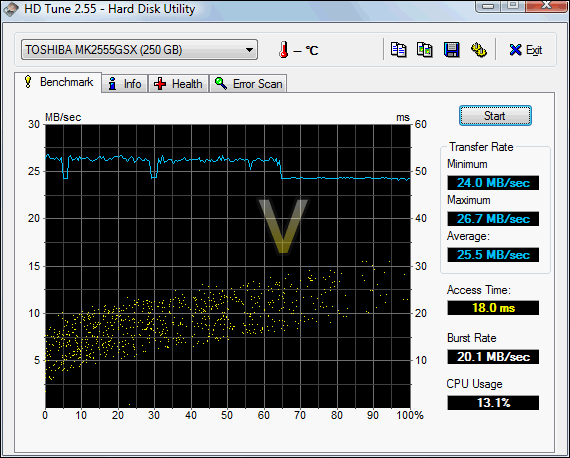
The USB 2.0 connection bottlenecked the performance of the hard drive. USB 2.0 is rated to up to 480 Mb/sec, which is equivalent to 60 MB/sec. From HD Tune, we can see that the average read transfer speed with the In Win AMMO was 24.0 MB/sec. The speed was consistent, although it did drop a little after half way of the test. There is nothing too alarming here. The burst rate was respectable at 20.1 MB/sec. Notice that temperature monitoring was not available.
Test 2: HD Tach 3.0.4.0
Read performance (Long Bench with 32mb zones)
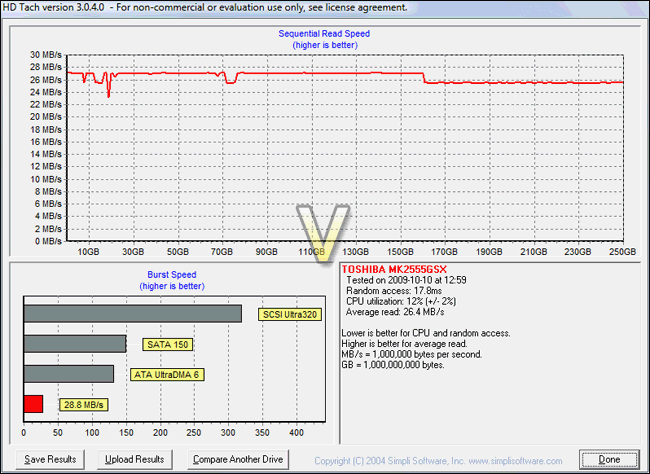
The test result from the long bench of HD Tach is similar to that of HD Tune. Here, however, we recorded a slightly higher average read speed of 26.4 MB/sec. The burst rate was also higher at 28.8 MB/sec. The discrepancies between the two tests demonstrate how large the margin of error is. Therefore, the performance results should not be taken with too much importance when comparing one external hard drive enclosure to another. It is simply a reference to see if the device is working properly within the norm.
Overall Usage
A summary of benchmarks and a comparison to an internal SATA connector
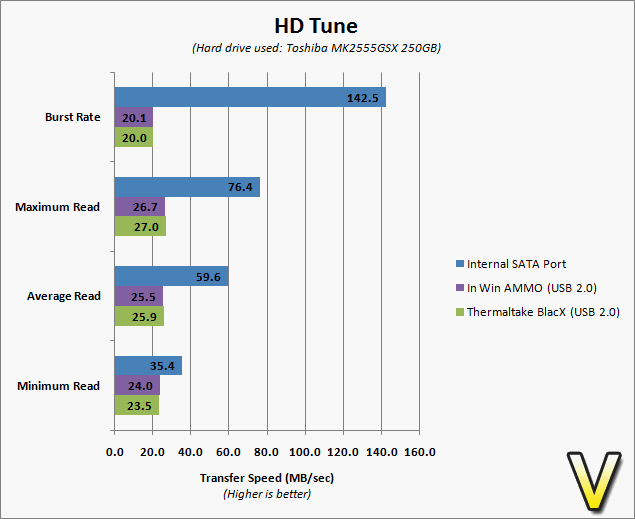
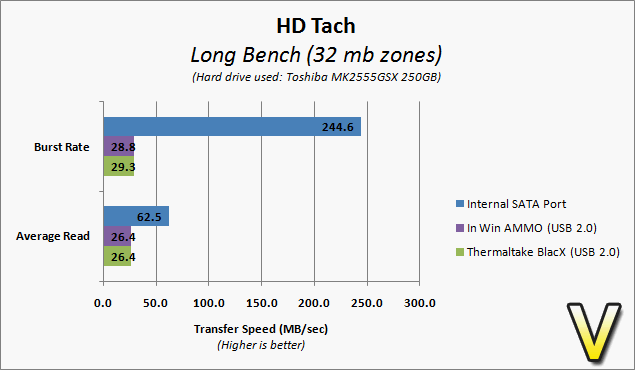
Unfortunately, I did not have any other external 2.5” hard drive enclosure on hand to compare the performance with the In Win AMMO. I have, however, the Thermaltake BlacX which does give some indication of how quick the AMMO’s transfer speeds are. As it can be seen on the two charts, the hard drive plugged to an internal SATA port yielded results that the AMMO could not reach. The only way for the AMMO to attain such speeds would be through eSATA, which is not supported. Yet, eSATA is not ideal for portability ends. Nevertheless, the difference in performance between the Thermaltake BlacX and the In Win AMMO was very little: as low as 0.1 MB/sec to as high as 0.5 MB/sec. It can then be concluded that the AMMO’s performance is well within the norms of a USB 2.0 device, and that it does not set any new records in this aspect.
Enabling or disabling the data encryption of the AMMO yielded insignificant differences.
Read performance
The USB 2.0 connection bottlenecked the performance of the hard drive. USB 2.0 is rated to up to 480 Mb/sec, which is equivalent to 60 MB/sec. From HD Tune, we can see that the average read transfer speed with the In Win AMMO was 24.0 MB/sec. The speed was consistent, although it did drop a little after half way of the test. There is nothing too alarming here. The burst rate was respectable at 20.1 MB/sec. Notice that temperature monitoring was not available.
Test 2: HD Tach 3.0.4.0
Read performance (Long Bench with 32mb zones)
The test result from the long bench of HD Tach is similar to that of HD Tune. Here, however, we recorded a slightly higher average read speed of 26.4 MB/sec. The burst rate was also higher at 28.8 MB/sec. The discrepancies between the two tests demonstrate how large the margin of error is. Therefore, the performance results should not be taken with too much importance when comparing one external hard drive enclosure to another. It is simply a reference to see if the device is working properly within the norm.
Overall Usage
A summary of benchmarks and a comparison to an internal SATA connector
Unfortunately, I did not have any other external 2.5” hard drive enclosure on hand to compare the performance with the In Win AMMO. I have, however, the Thermaltake BlacX which does give some indication of how quick the AMMO’s transfer speeds are. As it can be seen on the two charts, the hard drive plugged to an internal SATA port yielded results that the AMMO could not reach. The only way for the AMMO to attain such speeds would be through eSATA, which is not supported. Yet, eSATA is not ideal for portability ends. Nevertheless, the difference in performance between the Thermaltake BlacX and the In Win AMMO was very little: as low as 0.1 MB/sec to as high as 0.5 MB/sec. It can then be concluded that the AMMO’s performance is well within the norms of a USB 2.0 device, and that it does not set any new records in this aspect.
Enabling or disabling the data encryption of the AMMO yielded insignificant differences.


