
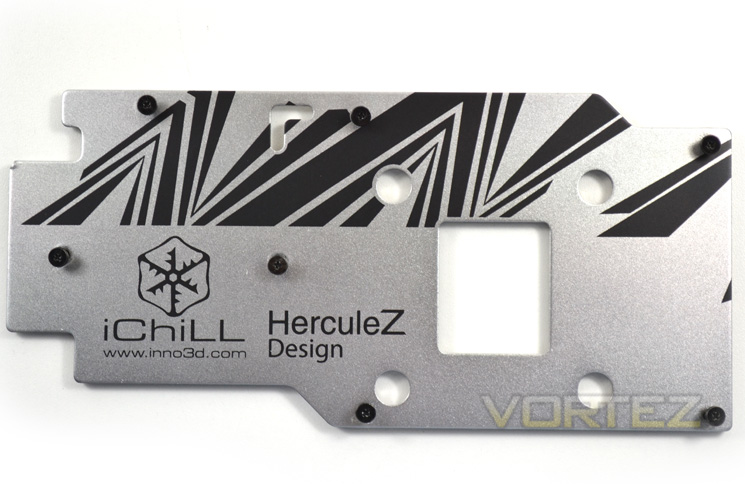
The first stage of disassembly is to remove the back plate. This was done by removing 7 screws which thread through the PCB and into the cooler
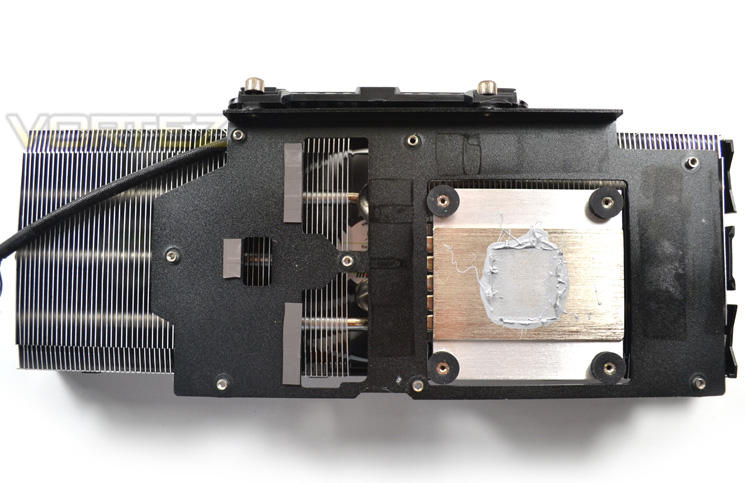
With the back plate removed, the main cooler can be detached by unscrewing four spring loaded screws along with a separate retaining screw which holds the mid-plate in place. The main cooler is made up of twin horizontal fin arrays coupled by 5 nickel plated copper heatpipes which are flattened at the brushed and plated base plate.
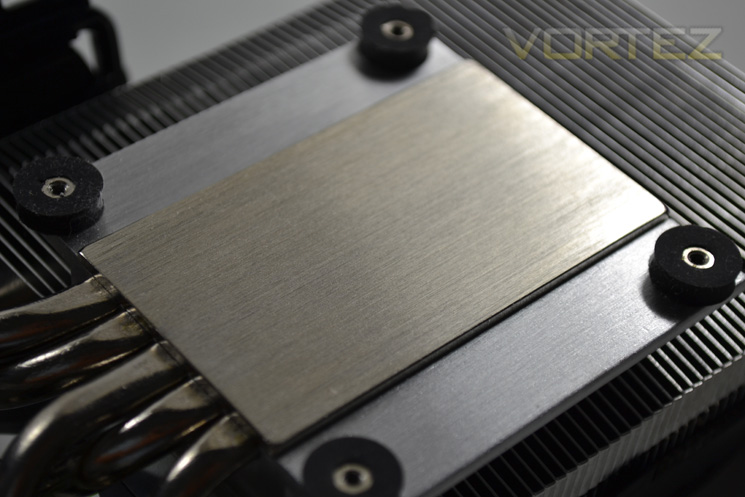
The base plate contact area is held in place by four screws which have rubber surrounds to prevent uneven fitting, thereby preventing damage to he delicate exposed GPU silicon core. Contact on our sample was excellent with just the right amount of paste used so we see no reason why you would need to replace the TIM on this card.
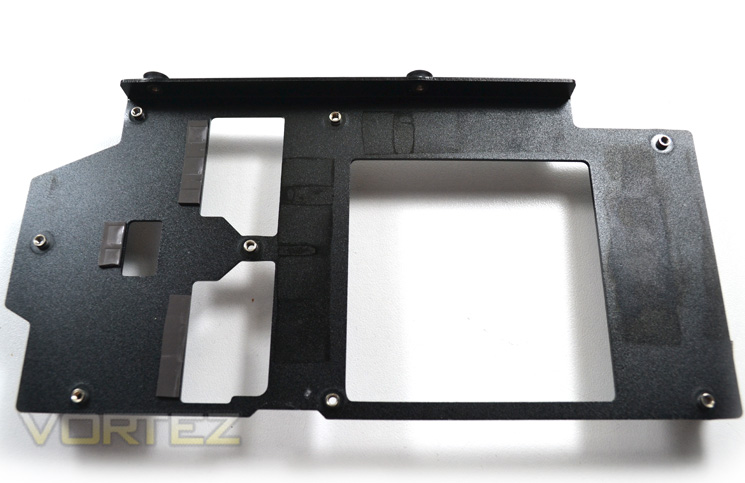
The mid-plate serves two purposes. Firstly it acts as a brace to prevent warping of the PCB under the heatsinks weight and secondly to directly cool both the memory modules and VRM.

The PCB is identical to the reference design meaning a reference GTX 780 waterblock will fit without issue.
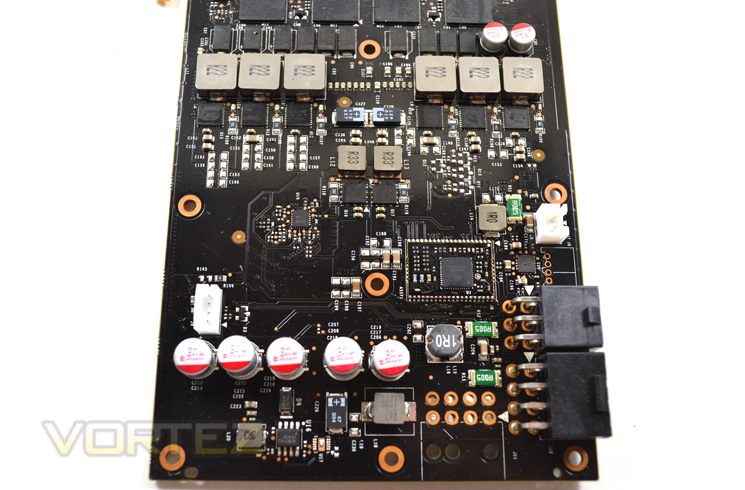
The VRM is a 6+2+1 phase power model, matching the reference design. Solid capacitors, RDS (ON) MOSFETs, and quality chokes are in abundance here as you would expect with such an expensive card. The power phase is controlled by the ON Semiconductor NCP4206 controller which we have seen a few times previously on other GPU's and uses the Texas Instruments INA3221 which is a three-channel, high-side current and bus voltage monitor with an I2C interface.
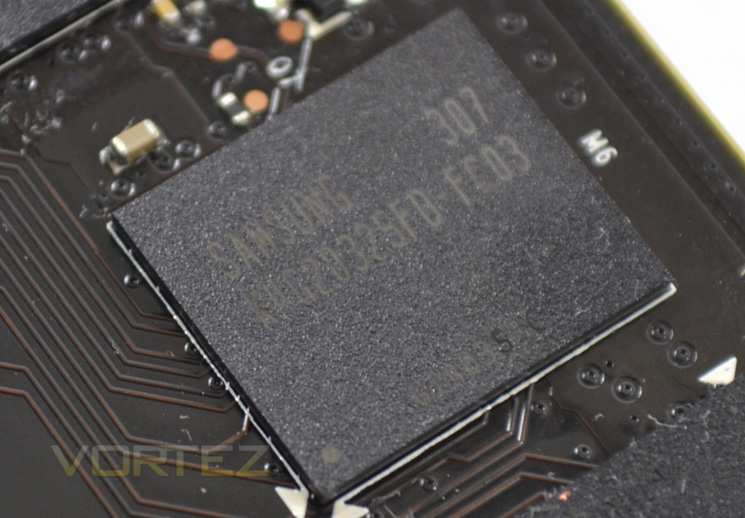
The memory IC's carry the model number K4G20325F0-FC03 and hail from Samsung and are specified to run at 1500MHz (6000Mhz effective).
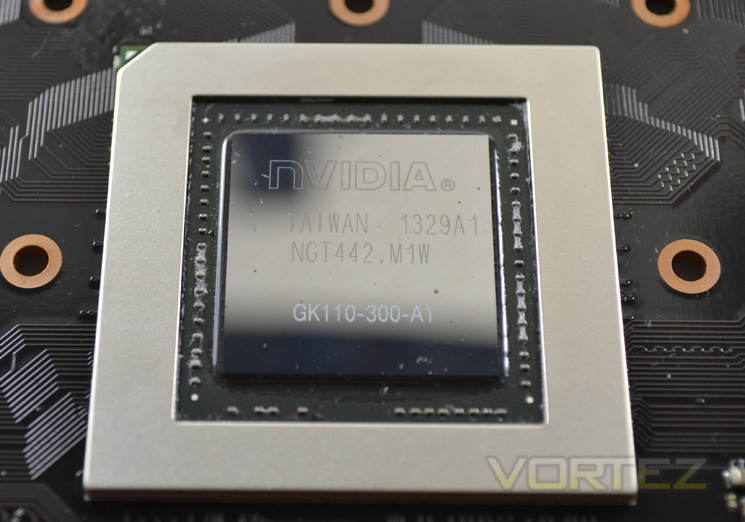
The GK110 is currently the fastest core available to gaming graphics cards. While it has two SMX disabled from the Titans 14, it makes up for this deficit by being overclocked from the factory to 1006MHz (1046MHz BOOST).


