
Upon uncovering the Keid 20 gaming headset, immediately this unit looks impressive. We have the white version for review today, although there is an option to choose black or white. Most gaming systems, hardware and peripherals are black and this headset provides a nice contrast to quite a bland tradition. I like to see manufacturers spending the time to produce something that looks a little different, that stands out and is colourful, rather than opting for the default unexciting black.
Mionix have chosen to go for a ‘closed’ style of headphones with the Keid 20 gaming headset. This is a good decision as it is essential for gamers to resist ambient noise. To truly be at the top of your game you need to be plugged in, closed headsets allow for this. So this is a step in the right direction.
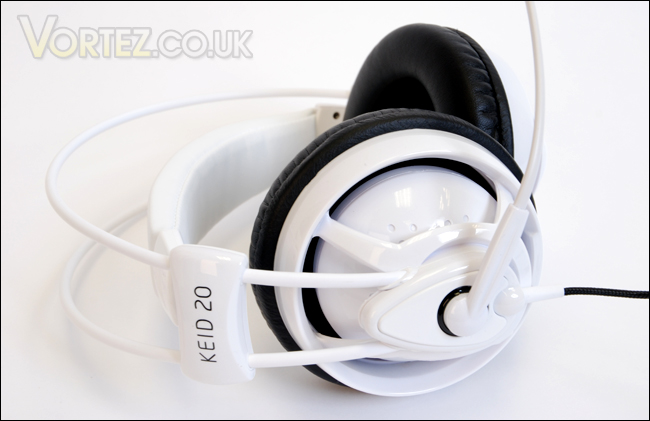
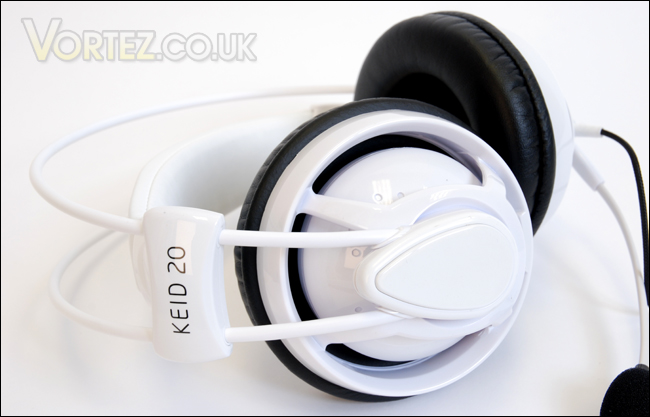
The structure of the Keid 20 is made from a durable plastic, providing us with a very robust little headset. There has been a lot of attention to the design of the outer headphone, as you can see from the images there are some concaves. The way the plastic has been shaped and molded gives the Keid 20 a very sharp look. Across the top of the headset there is a headband with two beams giving the composition a rigid yet flexible behavior. The headband is very soft and cushioned, positive features for the gamer in mind.
When I took the Keid 20’s out of the box to try on, I had trouble finding which was the left and right channels. For a good few minutes I was checking around trying to find out and then I found it… there is a tiny label on each side to illustrate which side is left and right. I can’t help but feel that this needs to be a little bigger for people to avoid the confusion I found myself in. I imagine its difficult bridging that gap between having it too big and just big enough because this headset is a stylish piece of kit that you want to be proud of and having a massive ‘L’ and ‘R’ doesn’t particularly follow the brand model.
As the Mionix Keid 20 is classified as a headset, it therefore has to have a microphone. The microphone is moveable as well as being easily managed via the audio controller. You can simply mute the mic if you do not wish to use it. All you do is switch ‘Mic’ to ‘off’. The volume can also be controlled on the fly by turning the wheel up and down.
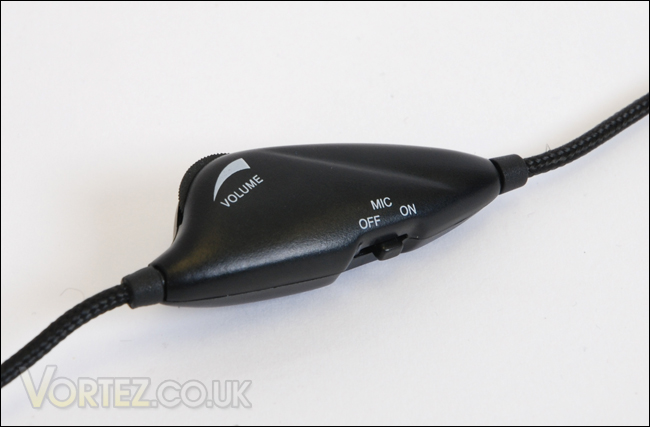
Volume and mic controller
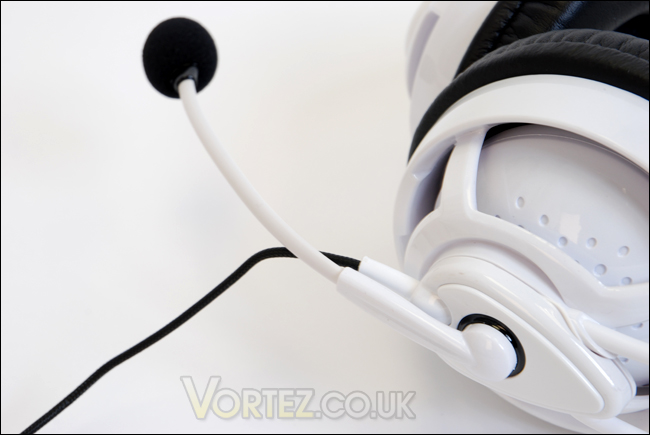
The Keid 20's moveable mic
The inside of the earphones on the Mionix Keid 20 are made of memory foam. Memory foam is polyurethane and due to its lower density reacts to pressure, molding to the shape of your ears. Just touching these pads makes you aware of how soft they are, many have memory foam mattresses on their beds so to have such an extravagant material on a headset Mionix have come up with a very novel idea indeed. A first, and again Mionix are being innovative with their products and they have to be congratulated for taking great care with even the smallest of features.
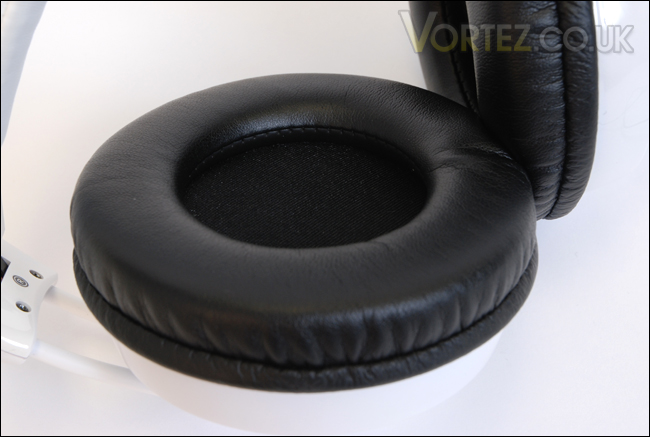
The memory foam ear cups, very comfy!
Lastly the cable is braided to reduce the risk of breakage. Whilst this is a great idea, I can’t help but think that the material is cheap and flimsy. It reminds me of a shoe lace. The reinforced cable that we found on the Steelseries Siberia headset is a much better move. The cable itself is 3m in length and hosts two 3mm gold plated jacks – a headphone jack and a microphone jack. Apart from this, the Keid 20 looks and feels like a very high quality piece of hardware. We’ve examined this headset and now its time for the Mionix Keid 20 to really prove its worth by testing it.
Mionix have chosen to go for a ‘closed’ style of headphones with the Keid 20 gaming headset. This is a good decision as it is essential for gamers to resist ambient noise. To truly be at the top of your game you need to be plugged in, closed headsets allow for this. So this is a step in the right direction.
The structure of the Keid 20 is made from a durable plastic, providing us with a very robust little headset. There has been a lot of attention to the design of the outer headphone, as you can see from the images there are some concaves. The way the plastic has been shaped and molded gives the Keid 20 a very sharp look. Across the top of the headset there is a headband with two beams giving the composition a rigid yet flexible behavior. The headband is very soft and cushioned, positive features for the gamer in mind.
The left side of the Keid 20; which hosts the mic
The right side of the Keid 20, in all its concaved glory
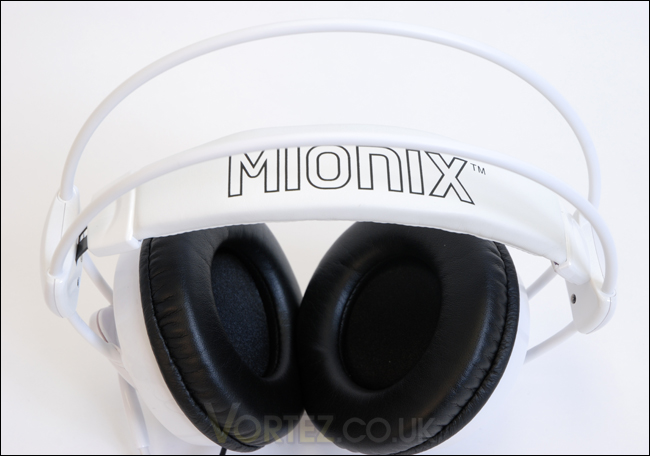
Looking down at the headband
When I took the Keid 20’s out of the box to try on, I had trouble finding which was the left and right channels. For a good few minutes I was checking around trying to find out and then I found it… there is a tiny label on each side to illustrate which side is left and right. I can’t help but feel that this needs to be a little bigger for people to avoid the confusion I found myself in. I imagine its difficult bridging that gap between having it too big and just big enough because this headset is a stylish piece of kit that you want to be proud of and having a massive ‘L’ and ‘R’ doesn’t particularly follow the brand model.
As the Mionix Keid 20 is classified as a headset, it therefore has to have a microphone. The microphone is moveable as well as being easily managed via the audio controller. You can simply mute the mic if you do not wish to use it. All you do is switch ‘Mic’ to ‘off’. The volume can also be controlled on the fly by turning the wheel up and down.
Volume and mic controller
The Keid 20's moveable mic
The inside of the earphones on the Mionix Keid 20 are made of memory foam. Memory foam is polyurethane and due to its lower density reacts to pressure, molding to the shape of your ears. Just touching these pads makes you aware of how soft they are, many have memory foam mattresses on their beds so to have such an extravagant material on a headset Mionix have come up with a very novel idea indeed. A first, and again Mionix are being innovative with their products and they have to be congratulated for taking great care with even the smallest of features.
The memory foam ear cups, very comfy!
Lastly the cable is braided to reduce the risk of breakage. Whilst this is a great idea, I can’t help but think that the material is cheap and flimsy. It reminds me of a shoe lace. The reinforced cable that we found on the Steelseries Siberia headset is a much better move. The cable itself is 3m in length and hosts two 3mm gold plated jacks – a headphone jack and a microphone jack. Apart from this, the Keid 20 looks and feels like a very high quality piece of hardware. We’ve examined this headset and now its time for the Mionix Keid 20 to really prove its worth by testing it.


