
Are you reading carefully? Good because this will be extremely important to some but irrelevant to others.
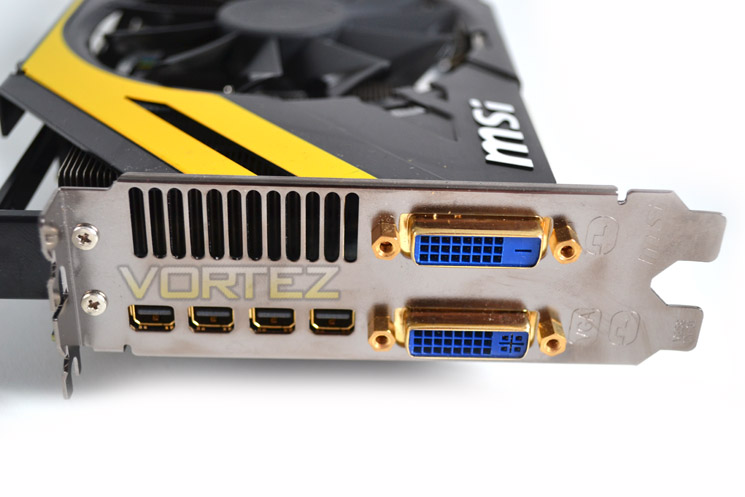
The I/O features four mini-DisplayPorts and two DVI ports. For those who require Dual-Link DVI I'm afraid you are out of luck here. High end monitors such as the Dell 30" 3007 WFP-HC which is capable of a 2560x1600 resolution will require an active DVI adapter to display at this resolution. We were aghast at this 'oversight' by MSI. Why release a flagship card that cannot display at the highest resolutions?
We investigated further and MSI told us that the HD7970 simply does not have the bandwidth to offer with Full Eyefinity support AND Dual Link DVI so the decision was made to support Eyefinity to its full extent over support for older, high end monitors. Monitors which support miniDP are not affected by this but that will be of little comfort to those who buy this card without carefully reading the specifications first.
The good news is that with the Active miniDP-DVI adaptor (costing around £80) does offer a 2560x1600 resolution but that is where the good news ended for us because despite trying two different leads, one offered a corrupt screen and the other resulted in random crashes when gaming which made for a very frustrating review! As such we cannot recommend using this card for this resolution unless you have a monitor with a native DisplayPort.
Here is the type we used with some success: DisplayPort® to DVI Dual Link Active Video Adapter Converter
We can understand the reasoning behind MSI's choice of ports however we would warrant that there are for more people who require a dual link DVI port over 6 screen Eyefinity!

At the opposite end of the card you will find the vents from the heat sink. Because the shroud is not full cover means some of the hot air will be vented beck into the case and with this card having 3 different voltage options, you can be sure it will kick out a fair bit of heat!
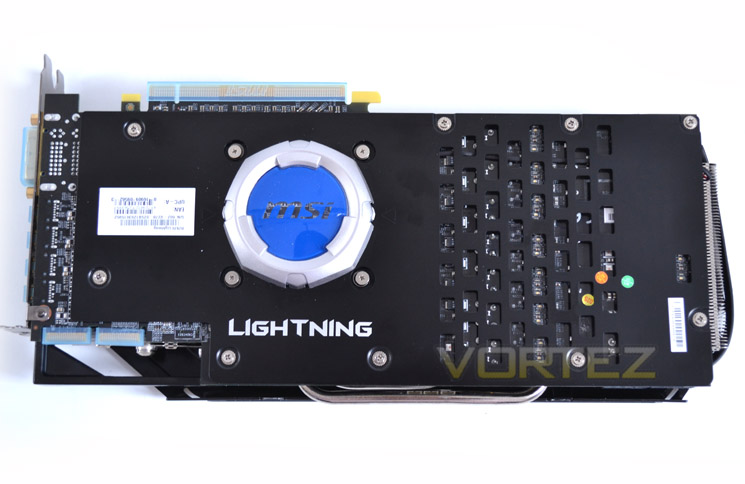
We do like a card with a back plate and thus were overjoyed to find that this card has a full length vented variety. The eye is however drawn not to the sleek back plate but to the silver/blue module that sits in the centre.
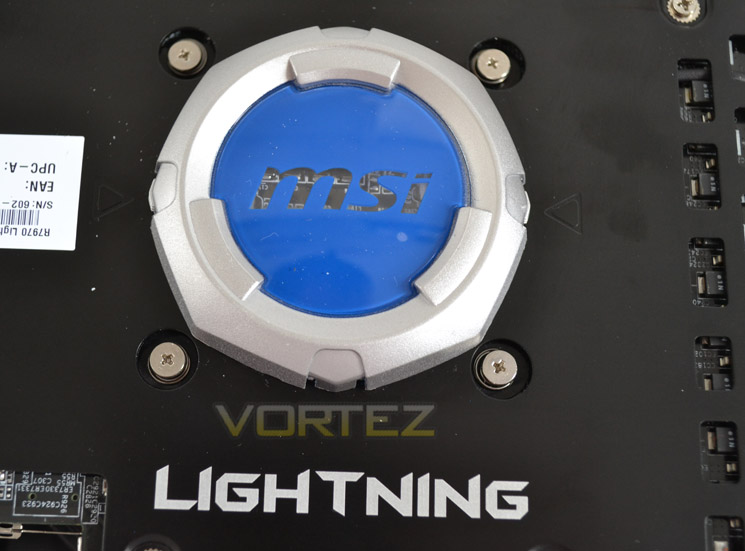
MSI call this the GPU Reactor. This isn't the first time we have seen this device and while it may look strange, what is hidden beneath is what counts.
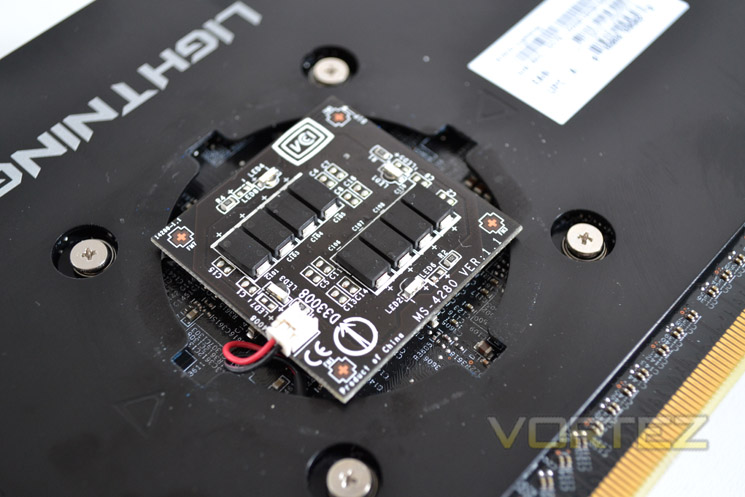
The GPU Reactor is a totally separate PCB. Its purpose is to increase current to the core and while this could be achieved using on-board components, by having the PCB separate, MSI claim it all but eliminates voltage fluctuations which is the bane of many overclocker’s lives.
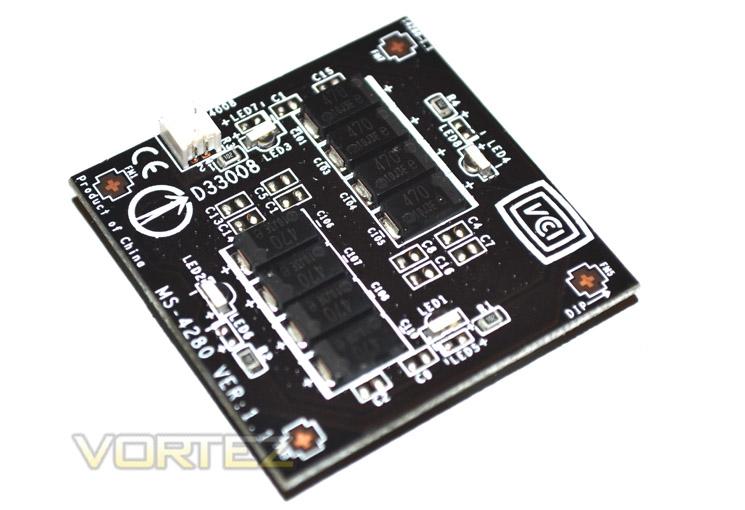
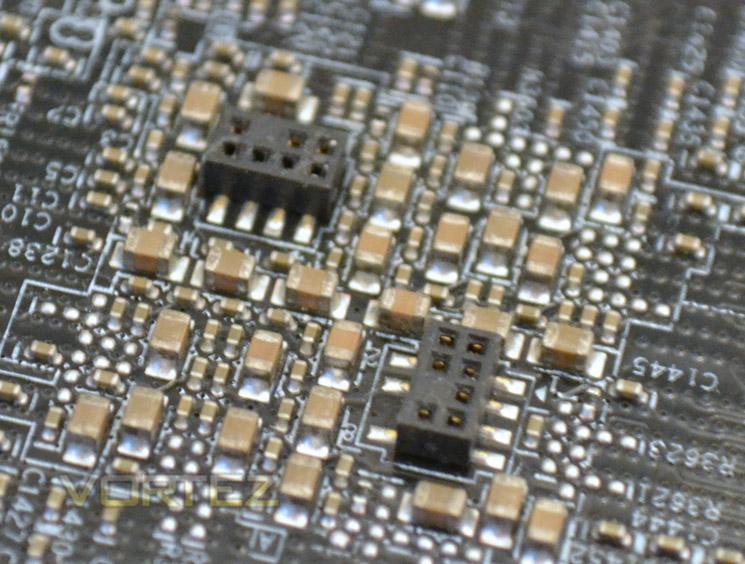
The module is connected by both power cable and pin/socket setup.

With the back plate removed you can see the full extent of the PSB. This is why we like a back plate. Some would suggest a back plate offers superior cooling however we believe it to be an excellent protector against rogue screws which could quite easily short the sensitive, component packed PCB.


