
Power Consumption
To test for power consumption we use the included iPower Meter found with our Thortech PSU. As system load figures obviously differ from idle it is extremely difficult to get an accurate figure of system draw and then simply take this figure away from the overall amount because each game will generate varying levels of CPU and hard drive activity. Dynamic power adjustments which fluctuate in game will also affect accurate power figures thus rendering any such power consumption calculations redundant at worst and approximate at best.
We will therefore take our system readings averaged over a benchmark run of Tessmark (100% load) and after 20 minutes of being idle in Windows 7. These can then be used as a comparison to other graphics cards to determine how much more or less power you can expect a GPU to consume.
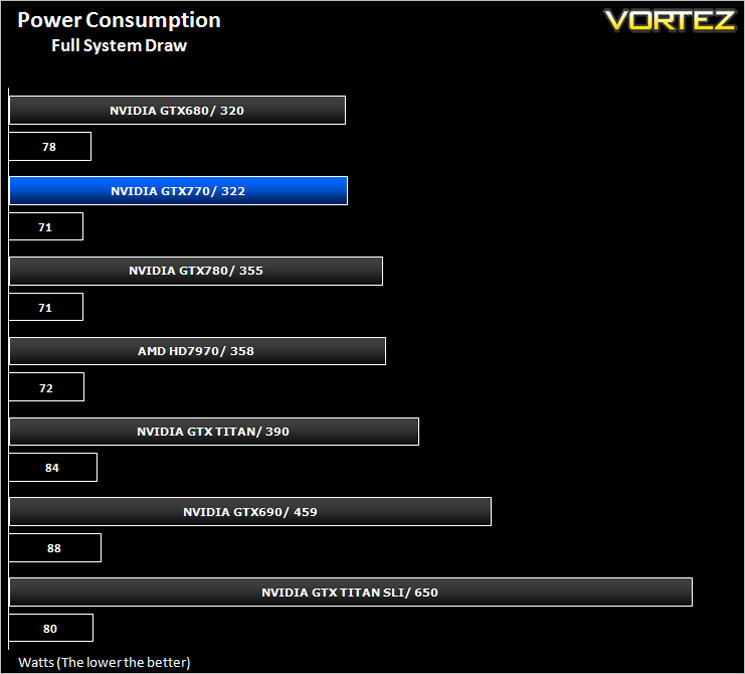
The NVIDIA GTX 770 consumes a little more power than the card it is based upon, the GTX680 but this is well within the realm of digital error so we would state that both the GTX770 and GTX680 consume roughly the same amount of power in real world scenarios.
Temperature
To test temperatures we measured idle temperatures after booting windows, letting all applications finish loading and ran a few benchmarks. Once the benchmarks were complete we left the card to reach a cooling plateau where we then took the idle temperatures. For the load tests, we would normally run Furmark for 20 minutes, taking the absolute maximum temperature attained however we found that this throttled the card and resulted in spurious results. So we set Heaven running continuously for 20 minutes and used this as a temperature result as the card did not throttle with this application.
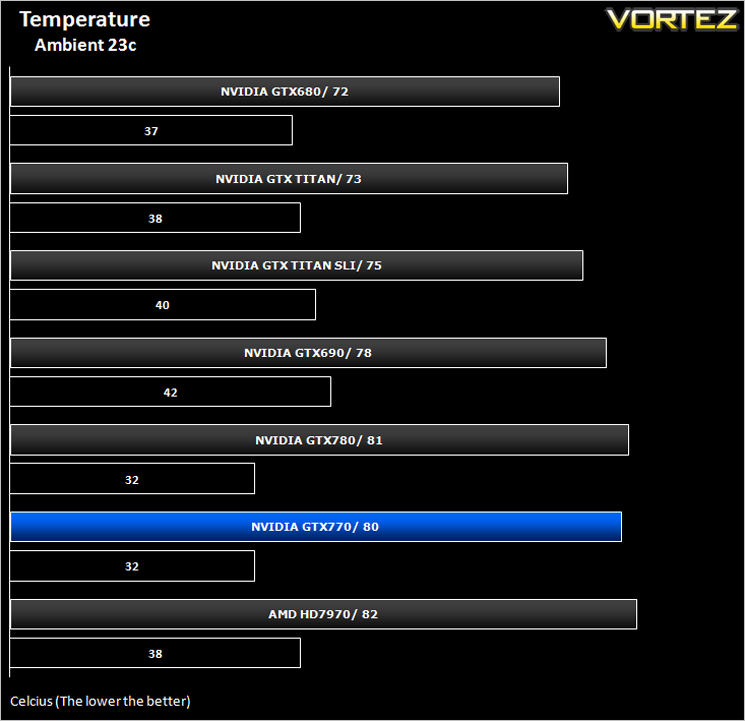
With the default max temp set to 80c, the GTX770 duly obliged and reached this temperature while reducing the boost clockspeed slightly to keep temperatures in check. This 80c limit can be adjusted to 95c when overclocking to allow further 'boosting'.
Acoustics
As with the GTX 780, we were very impressed with NVIDIA's new cooling design. For anyone familiar with the Previous GTX 6XX reference GPU coolers, you will be happy to hear that the noise has been reduced to little more than a murmur under normal operating conditions and is unlikely to be heard above normal case fans. adjusting the fan speed profile decreases fan noise further but fan speed will obviously depend greatly on your case operating temperature as to which speed gives the greatest balance of cooling vs. acoustics.


