
2.66ghz
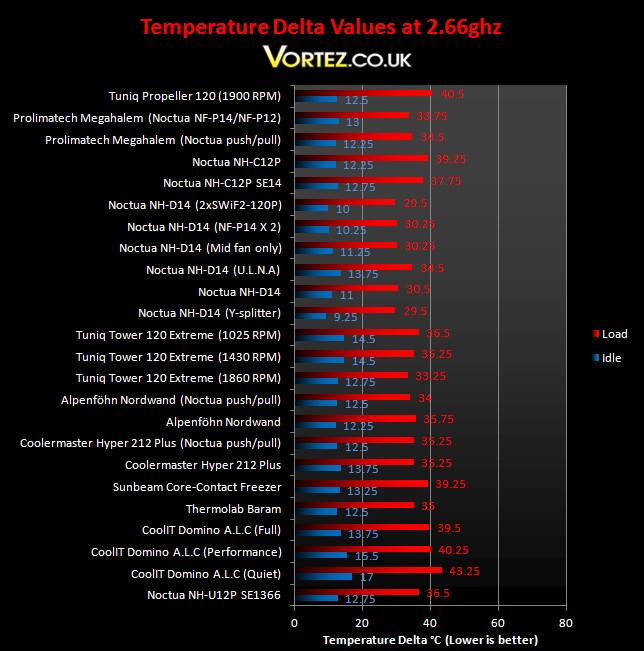

The Tuniq Propeller 120, given its size and top-down characteristics, ends up close to the bottom of the table. Even at full speed, the temperature was very high but remained stable under stress. However it has to be commended for being able to deliver the same performance as the CoolIT Domino A.L.C in performance mode. It lags a few degrees behind the Noctua NH-C12P SE14 under load. At idle, it performs very well and is comparable to the best coolers out there.
If we consider the target audience who will be buying this for their HTPCs or m-atx boxes, the Tuniq's performance is acceptable and will definitely keep any stock processor cool, even the power hungry i7 920. However, I had to omit the overclocked results due to the cooler being unable to maintain the temperatures below the 100 degrees maximum limit at the T junction. This is the Tuniq's main downfall compared to the Noctua solutions.
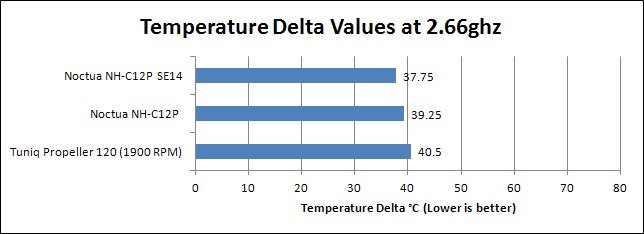
On closer look at its main rivals, the Tuniq Propeller cannot keep up with the superior fan on the Noctua SE14. Its performance is more akin to the now superseded NH-C12P, falling only a degree short.
Noise
The fan remained quiet at full speed and reducing the speed held no obvious benefit aurally. Instead the cooling performance dropped to below acceptable levels. When comparing this to the Noctua solution, the Tuniq's disadvantages are highlighted. The much smaller surface area of the fins is its Achilles heel. The motor sound of the fan was inaudible, showing the benefit of the magnetic fluid dynamic bearing and the fin array prevented high pitched sounds from developing.
The Tuniq Propeller 120, given its size and top-down characteristics, ends up close to the bottom of the table. Even at full speed, the temperature was very high but remained stable under stress. However it has to be commended for being able to deliver the same performance as the CoolIT Domino A.L.C in performance mode. It lags a few degrees behind the Noctua NH-C12P SE14 under load. At idle, it performs very well and is comparable to the best coolers out there.
If we consider the target audience who will be buying this for their HTPCs or m-atx boxes, the Tuniq's performance is acceptable and will definitely keep any stock processor cool, even the power hungry i7 920. However, I had to omit the overclocked results due to the cooler being unable to maintain the temperatures below the 100 degrees maximum limit at the T junction. This is the Tuniq's main downfall compared to the Noctua solutions.
On closer look at its main rivals, the Tuniq Propeller cannot keep up with the superior fan on the Noctua SE14. Its performance is more akin to the now superseded NH-C12P, falling only a degree short.
Noise
The fan remained quiet at full speed and reducing the speed held no obvious benefit aurally. Instead the cooling performance dropped to below acceptable levels. When comparing this to the Noctua solution, the Tuniq's disadvantages are highlighted. The much smaller surface area of the fins is its Achilles heel. The motor sound of the fan was inaudible, showing the benefit of the magnetic fluid dynamic bearing and the fin array prevented high pitched sounds from developing.


