
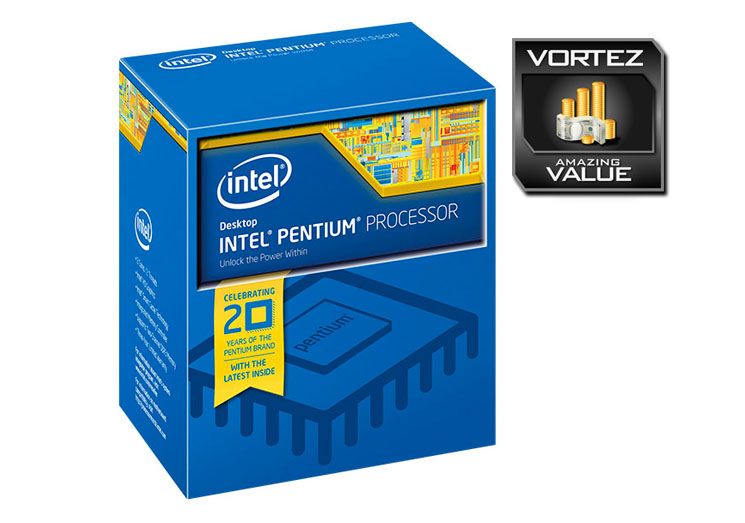
By introducing an unlocked Pentium processor, Intel has appealed to a number of different groups but especially the novice system builder. What better way to celebrate 20 years of Pentium with a fun and affordable processor for hardware enthusiasts. By focussing on G3258’s ability to overclock, such attributes as the cache, number of cores or level of frequency become insignificant because by pushing this particular chip beyond 40% users can enter the territory of some of the stronger options from the Core i5 family.
Throughout our tests G3258 tackled the benchmarks admirably. If we compare the out-of-the-box performance of this chip to such contenders as the Core i7-4770K or Core i7-4790K the Pentium offering falls behind, but applying a substantial overclock to this processor changes things quite dramatically and the improved frequency translates to mid-range performance.
Being able to overclock this dual-core Haswell processor from a mere 3.2GHz to 4.5GHz is very advantageous and it can handle such a boost in modification without causing temperatures to sky-rocket. We were pleasantly surprised that G3258 can sit at 4.5GHz with the maximum temperature readout hitting approximately 70C. Leaving the processor at its stock 3.2GHz presents us with a mere low 20C at idle and just 40C loaded which will be music to the ears of those within hardware circles.
Intel’s G3258 can be purchased for £55 GBP / $70 USD. At such a cost, budget-conscious system builders can design and build a system based around Haswell and still reap similar performance to that of a Core i5/Core i7 chip if they apply an overclock... and really if you’re buying this unlocked processor you’d be a fool not to.
Choosing to celebrate 20 years of Pentium with a fun-packed processor has been a great decision by Intel. The G3258 surpasses expectations for such a low-cost option and really comes into its own when an overclock is applied.
Pros
+ Low-cost, affordable
+ Overclocks beyond 40%
+ Ideal for general purpose
+ Similar gaming results to enthusiast chips
Cons
- Struggles with demanding processing tasks
+ Low-cost, affordable
+ Overclocks beyond 40%
+ Ideal for general purpose
+ Similar gaming results to enthusiast chips
Cons
- Struggles with demanding processing tasks
Click here for an explanation of our awards at Vortez.net.


